
Three Alliterative Sonnets

Hello friends,
This week, three sonnets combining qualitative and alliterative verse. Enjoy! (And if you do, please consider supporting my work by purchasing either my omnibus edition Knit Ink (and Other Poems) or something from my store.)
Alternatively, buy me a coffee on Ko-Fi!
This first poem is a Shakespearean sonnet in amphibrachic tetrameter. Moreover, the first two “beats” (amphibrachic stresses*) of each line alliterate, as do the second two beats — for example, in line 1, “read” and “rite” alliterate, as do “form(ula)” and “frees”.
*The amphibrach is a metrical foot of three syllables — unstressed-stressed-unstressed — so my alliterations are on the second and fifth syllables of each line and on the eighth and eleventh syllables of each line.
(Spot the palindrome!)
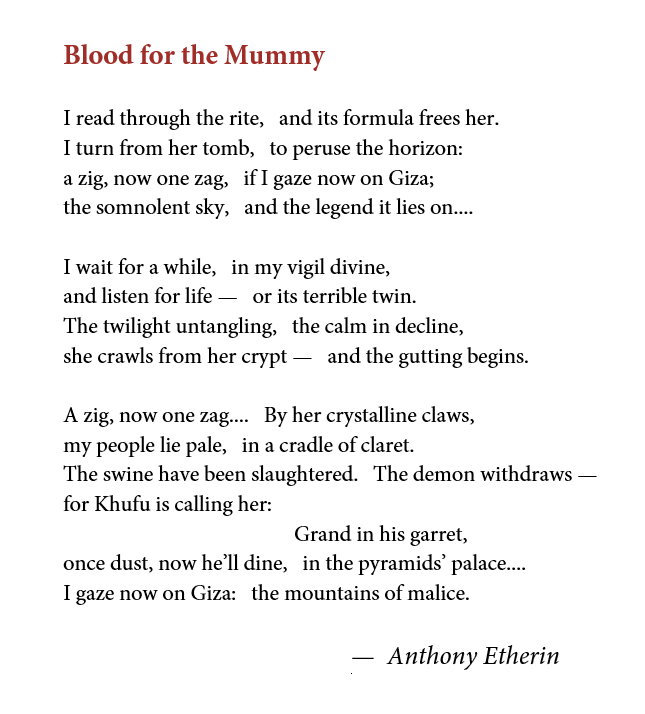
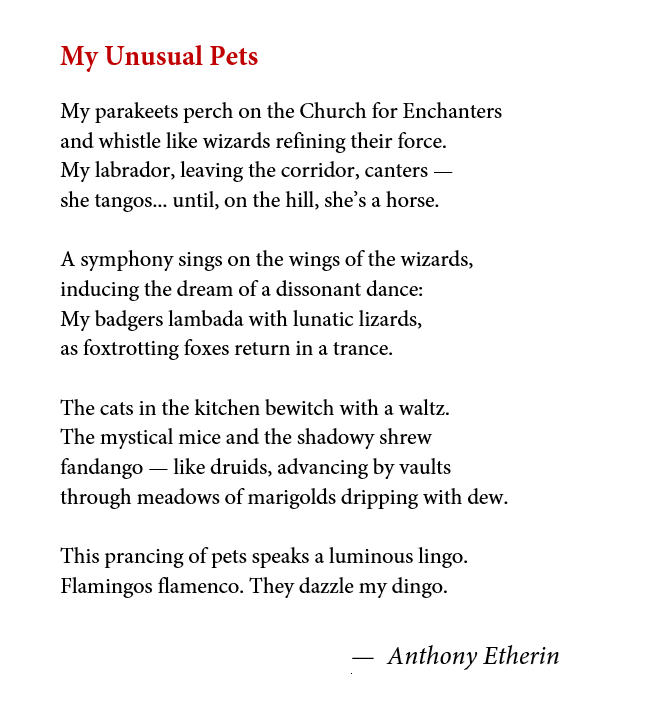
This second poem follows the same alliterative constraint:
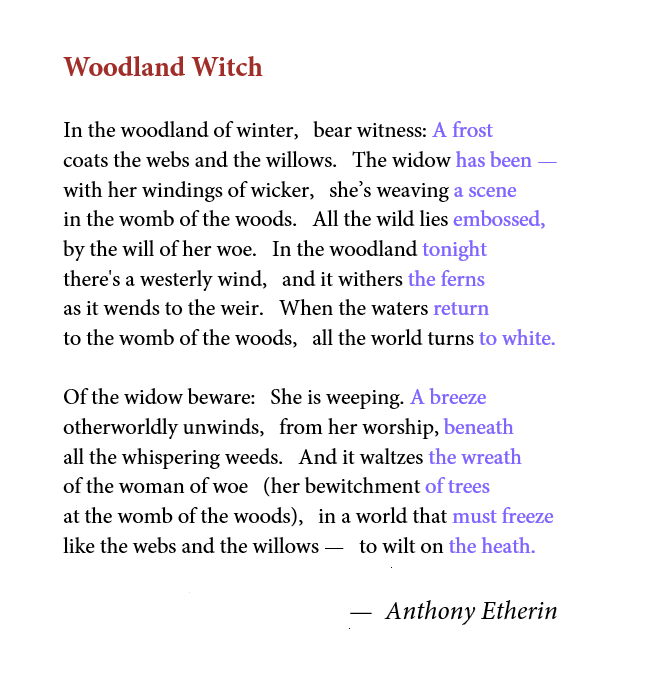
Finally, WOODLAND WITCH, a Shakespearean sonnet in anapaestic tetrameter. In this poem, the first three beats of each line alliterate with the phrase “woodland witch” (i.e. they alliterate on “w”). The anapaest is a metrical foot of three syllables — unstressed-unstressed-stressed — so my alliterations are on the third, sixth and ninth syllables of each line. Moreover, this poem is an aelinscape: reading only the final two syllables of its lines uncovers a sonnet in iambic monometer.
You astound me!
You really dazzled my dingo today. I love the alliteration, especially in the second one. The third one was really interesting, precisely because I had the expectation of alliteration in the back half of the lines, and it went missing, which make the return of the alliteration all the more powerful on the next line.